ServicesWisdom Teeth Removal
Wisdom Teeth Removal in Highland Village
Not every wisdom tooth has to go. We look at the angle, the roots and the nerve on a 3D scan, then tell you plainly which teeth are causing trouble, which can be watched, and how the removal will go if it is needed.
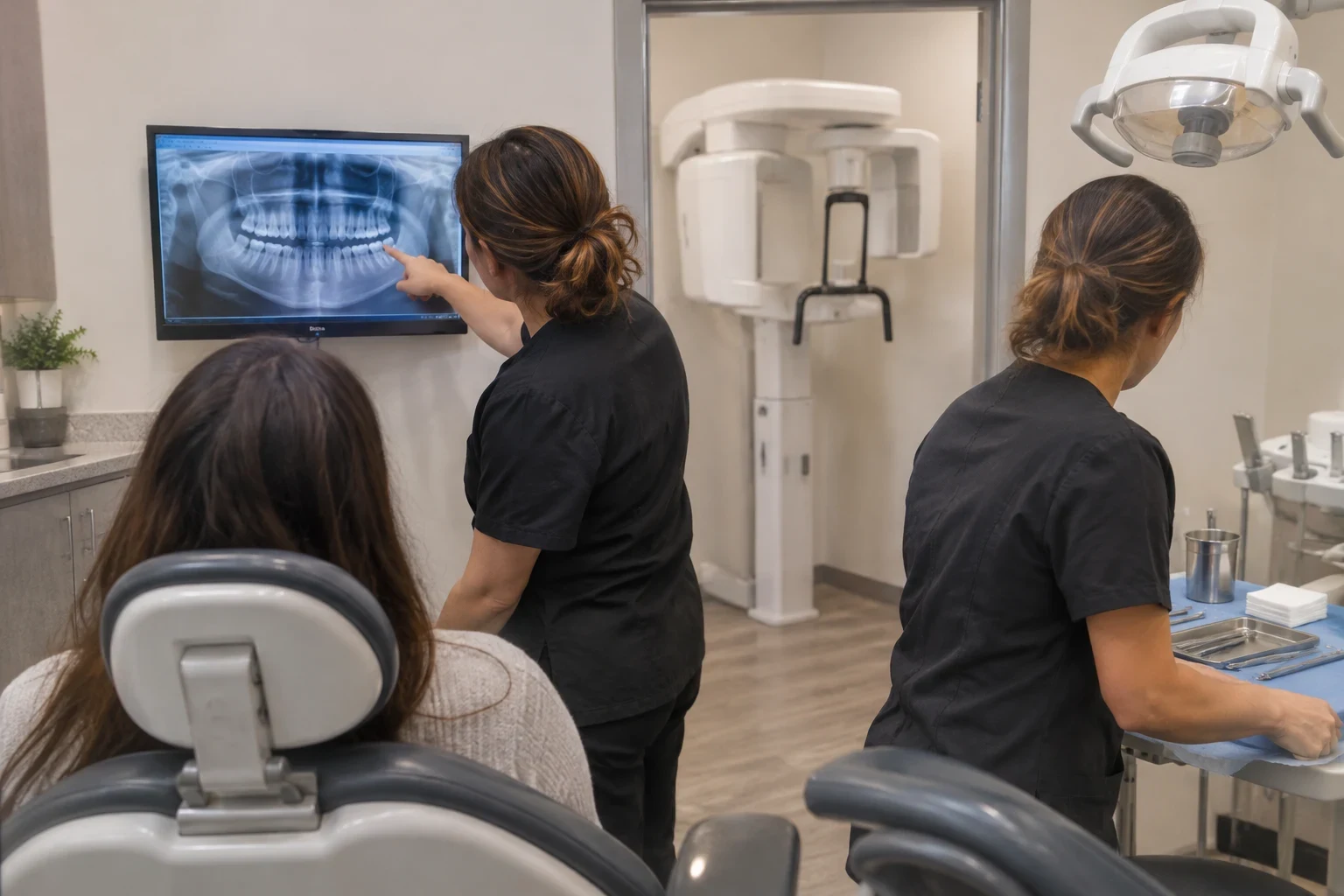
When third molars should come out, and when they can stay
Wisdom teeth are third molars, the last teeth to form, usually showing up between the late teens and mid-twenties. Plenty of jaws have room for them. When a tooth comes in upright, fully through the gum and easy to clean, we often recommend leaving it alone and checking it at regular visits.
Removal makes sense when a tooth is stuck against the second molar, only partly through the gum, or decaying in a spot no toothbrush reaches. A partly erupted tooth leaves a flap of gum, the operculum, where food and bacteria collect. That causes pericoronitis, a recurring infection that tends to come back until the tooth is out. A tilted wisdom tooth can also wear a cavity into the back of the healthy molar in front of it.
We see patients from Highland Village, Lewisville, Flower Mound and nearby towns, from teenagers on a parent's PPO plan to adults whose wisdom teeth only started hurting years later.
What your wisdom tooth visit covers
- Exam and digital X-rays
- We check the gum around each third molar, look for swelling or pockets, and take digital X-rays to see crown and root position.
- CBCT scan when roots sit near the nerve
- Lower wisdom tooth roots can lie close to the inferior alveolar nerve, which gives feeling to the lip and chin. A CBCT scan shows that distance in three dimensions, so we can plan the safest way to remove the tooth or decide it is better left in place.
- A written treatment plan
- You get a plan that names each tooth, whether it is soft tissue or bony impaction, and why we recommend removing or monitoring it.
- Removal under local anesthetic
- We numb the area thoroughly before starting. Erupted teeth are loosened and lifted out, while impacted teeth may need a small gum opening and sectioning into pieces so less bone has to be removed.
- Aftercare and a follow-up
- You leave with gauze, written instructions and a follow-up visit on the calendar to check that the socket is healing as it should.
Signs your wisdom teeth need a closer look
Sore, swollen gum behind the last molar
Tender gum that flares up and settles down again often means pericoronitis under a partly erupted tooth.
Bad taste or odor that keeps returning
Food trapped under the gum flap breaks down and drains, which leaves a sour taste even after brushing.
Jaw stiffness or pain opening wide
Infection around a lower third molar can spread into the chewing muscles and limit how far you can open.
Pressure or crowding at the back
A tooth pushing forward at a mesioangular or horizontal tilt can press on the second molar and make that area hard to floss.
A cavity you can feel on the back tooth
Decay on the wisdom tooth, or on the molar it leans against, is a common reason we recommend removal before the healthy tooth is lost too.
How a wisdom tooth removal visit goes
- 1
Imaging and the decision
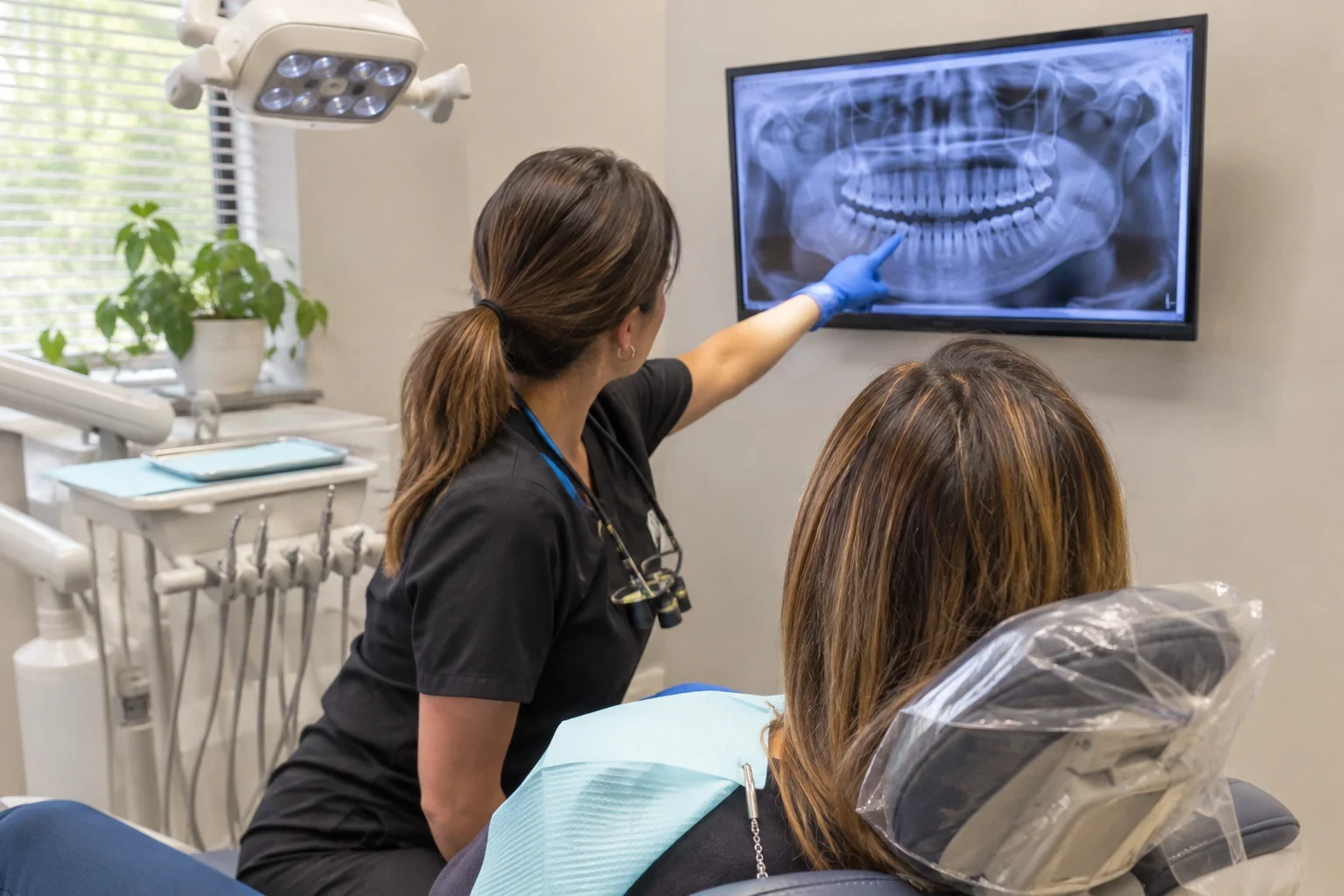
At your evaluation we review the X-rays or CBCT with you on screen and point to the roots, the nerve canal and any bone loss. If a tooth can stay, we say so.
- 2
Numbing and comfort checks
We place local anesthetic and test the area before any instrument touches the tooth. You can raise a hand to pause at any point.
- 3
Removing the tooth
Simple extractions take minutes. For an impacted tooth we open the gum, remove a small amount of bone if needed, section the tooth and lift each piece out, then rinse the socket and close the gum with stitches.
- 4
Protecting the clot
The blood clot in the socket is the start of healing. Skipping straws, smoking and hard spitting for the first several days lowers the risk of dry socket, also called alveolar osteitis.
- 5
Recheck
At your follow-up we check healing and remove stitches if they are not the dissolving type.
What affects the cost of wisdom teeth removal
Your quote comes from what the imaging shows, not a flat number per mouth. Before treatment you get a written estimate, and we look up your PPO benefits first; our office is in-network with 15+ major PPO dental insurance plans. Patients without coverage can join our in-house Membership Plan. If you want to spread the cost out, financing runs at 0% interest for as long as 24 months, and seeing whether you preapprove leaves your credit score untouched.
- Number of teeth
- Removing one problem tooth costs less than removing all four, and we will not add healthy teeth to the plan just to round it out.
- Type of impaction
- A fully erupted tooth is a routine extraction. Soft tissue impaction needs a gum incision, and bony impaction needs bone removal and sectioning, which takes more chair time.
- Root shape and nerve position
- Curved, fused or long roots, or roots near the nerve canal, call for a more careful technique and sometimes a CBCT scan.
- Active infection
- If pericoronitis is flared, we may treat the infection first and schedule removal once the tissue calms down.
Wisdom teeth removal questions
Something not covered here? (972) 483-4293
Do my wisdom teeth have to come out if they don't hurt?
Not always. Painless teeth can still cause decay or bone loss on the molar next door, which is why we image them. If they are upright, cleanable and not harming nearby teeth, we usually recommend monitoring them instead.
How long is recovery?
Most patients are back to normal routines within a few days, with swelling peaking around the second or third day. Impacted lower teeth usually take longer than upper teeth. Soft foods and cold packs help for the first couple of days.
What is dry socket and how do I avoid it?
Dry socket happens when the blood clot dislodges or dissolves early and the bone underneath is exposed, causing a throbbing ache a few days after removal. Avoid straws, smoking and forceful rinsing early on. If it happens, we place a medicated dressing in the socket to ease the pain.
Can I have all four removed in one visit?
Often, yes, if all four need to come out and you are comfortable with that. Some patients prefer doing one side at a time so they can chew on the other side while healing. We plan it around what works for you.
Will I be awake?
Yes. We use local anesthetic, so the area is fully numb while you stay awake. You will feel pressure but should not feel sharp pain, and we add more anesthetic if anything feels uncomfortable.
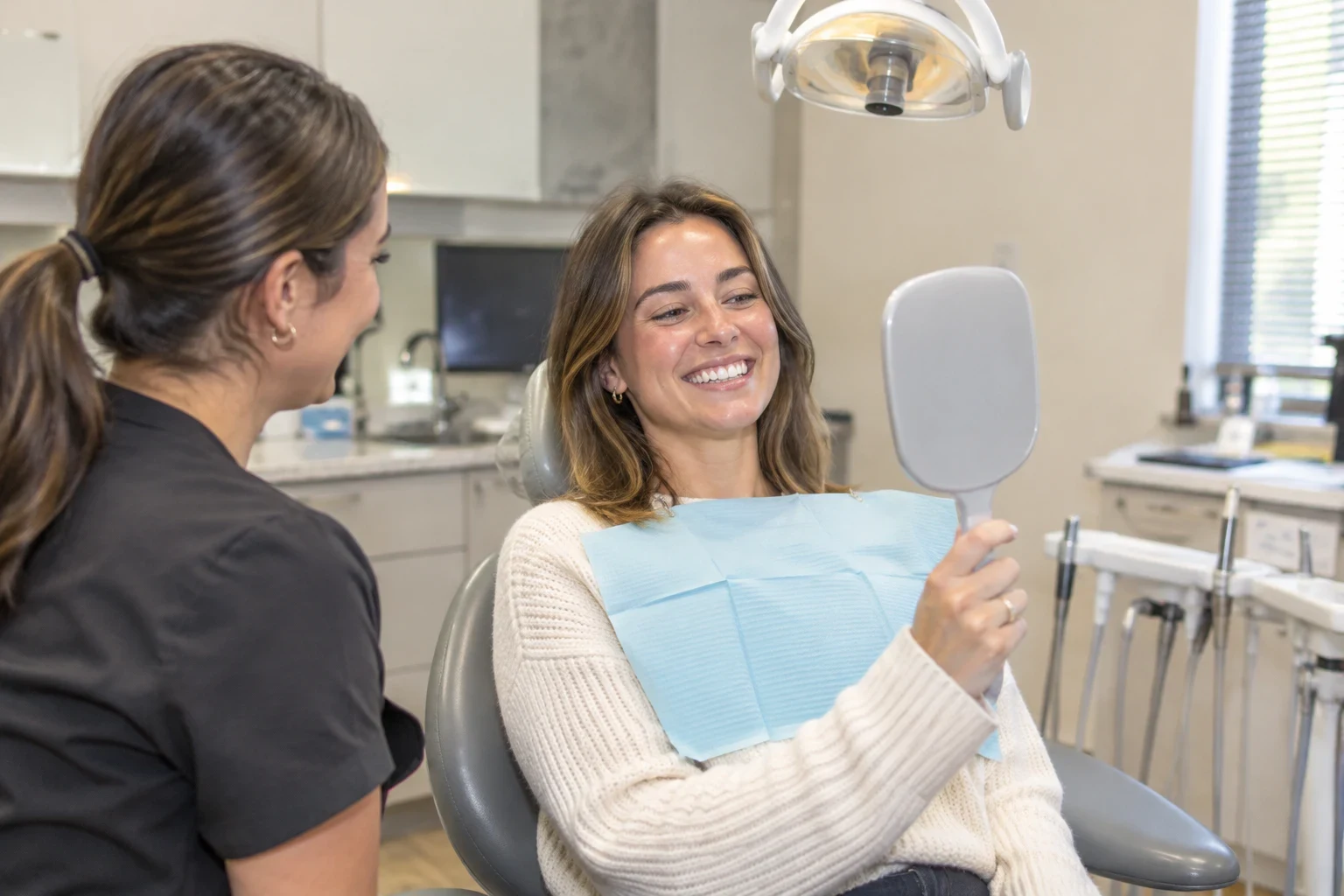
Find out which wisdom teeth actually need to go
For $25, our focused evaluation gets you a thorough look at every third molar, digital X-rays, a 3D CBCT scan when the roots call for one, and a treatment plan to take home and weigh. New to our office? The $89 New Patient Special pairs a full exam with a cleaning.