ServicesRoot Canals
Root Canals in Highland Village
A root canal removes the inflamed or infected nerve inside a tooth, cleans and seals the canals, and lets you keep the natural root. We check first whether the tooth is worth saving and tell you plainly if it is not.
Saving the Tooth You Already Have
Inside every tooth is the pulp: nerve, blood vessels and connective tissue running down narrow canals to the tip of each root. Deep decay, a crack or an old filling that leaked can let bacteria reach that pulp. Once it is inflamed past the point of healing, or the tissue dies and infection spreads into the bone, the tooth will not settle down on its own.
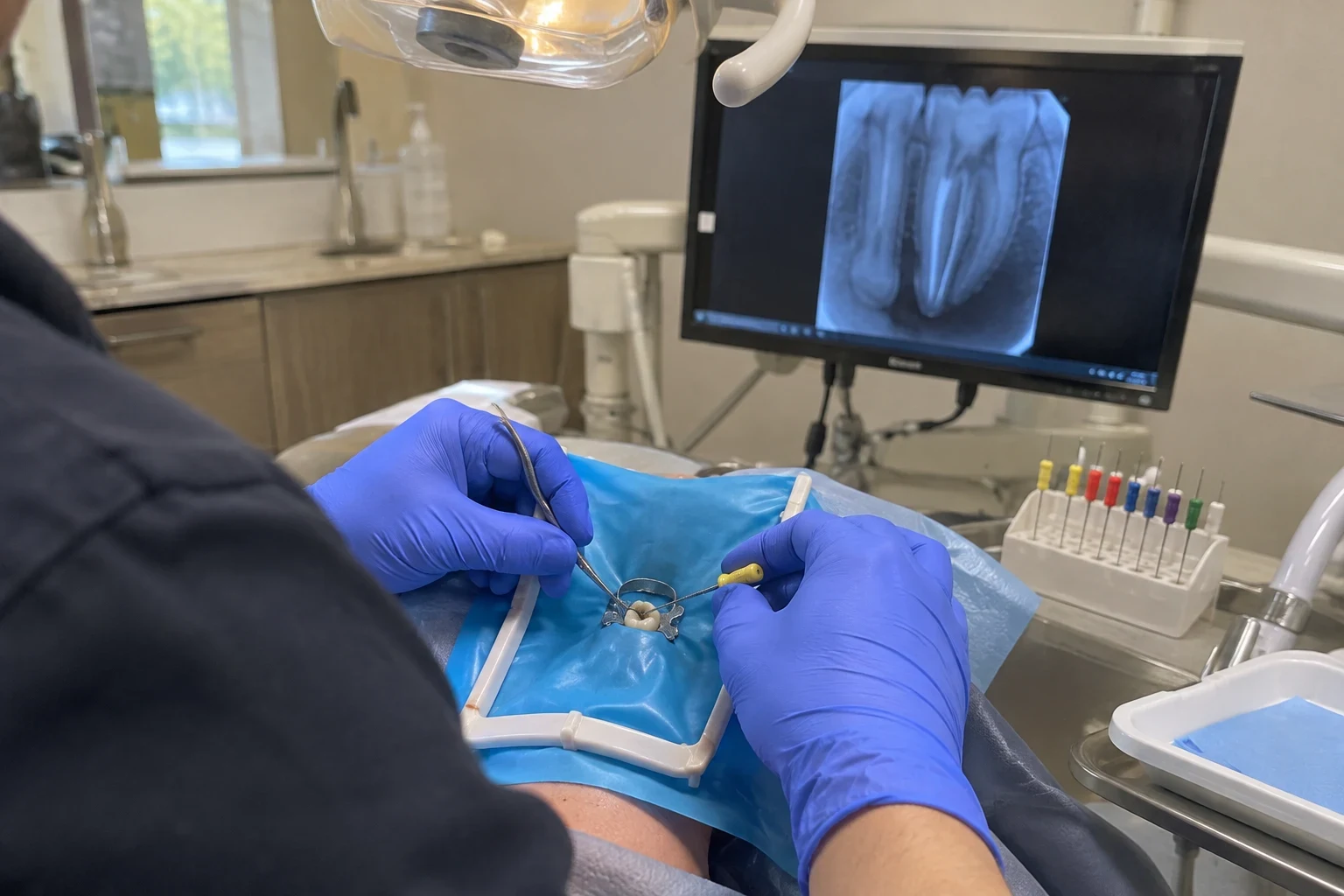
Root canal treatment removes that tissue, disinfects the canal system and fills it so bacteria have nowhere to grow. The outer tooth stays in place, which keeps your bite, your jawbone and the neighboring teeth where they are. Our first question is always whether a tooth can be restored. If enough healthy structure remains, a root canal and crown usually beat pulling it.
Sometimes the answer is no. A crack running down the root, decay below the bone line or too little tooth left to hold a crown are reasons we will recommend an extraction and talk you through replacement options, including dental implants.
What Root Canal Treatment Includes
- Diagnosis with imaging
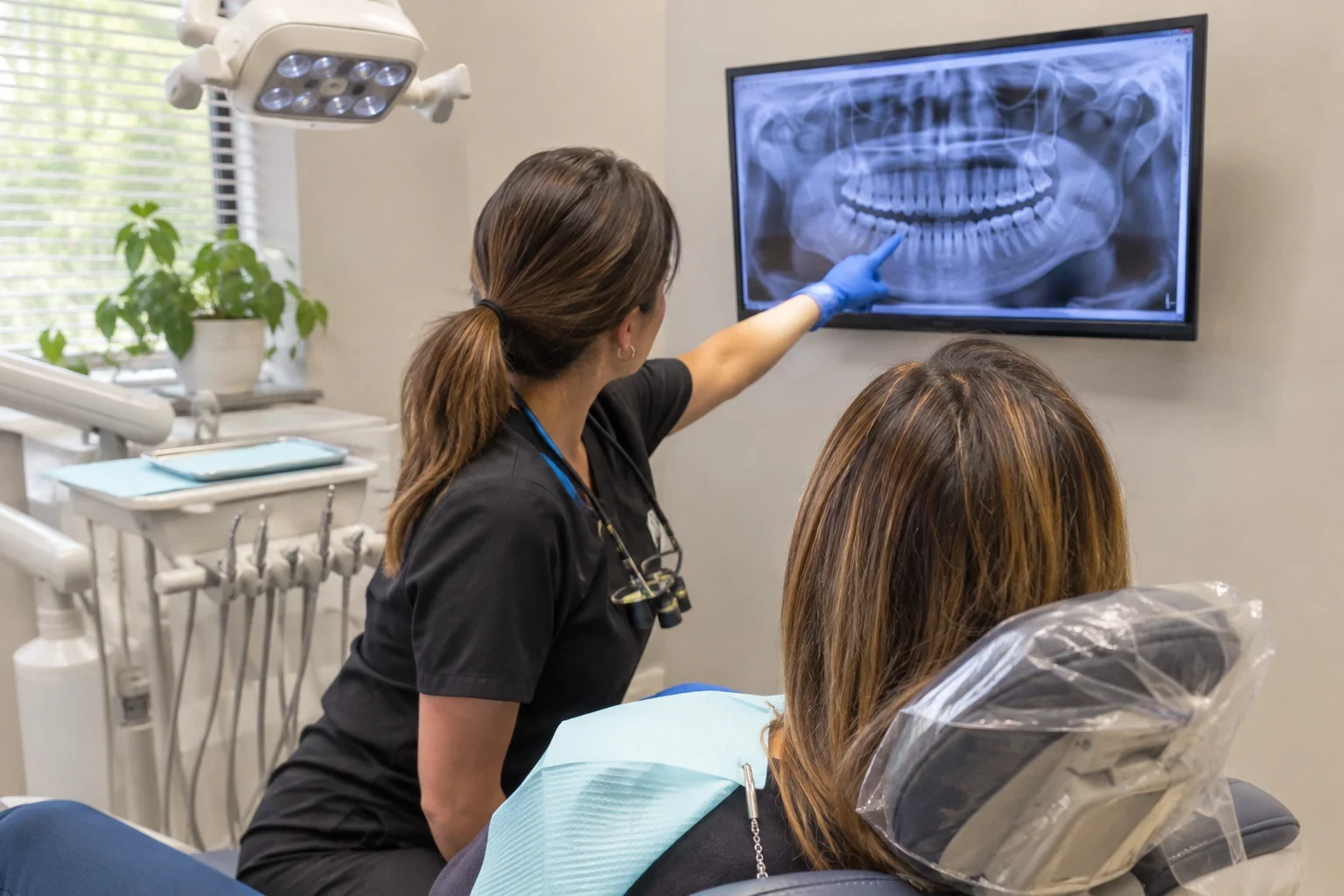
- Digital X-rays show the canals and any dark spot at the root tip that points to infection. When the anatomy is hard to read or we suspect a crack, a CBCT scan gives a 3D view of the roots and the bone around them.
- Isolation with a rubber dam
- A thin latex or non-latex sheet goes around the tooth. It keeps saliva and its bacteria out of the clean canals, and keeps instruments and rinse solutions out of your mouth.
- Cleaning and shaping the canals
- Flexible nickel-titanium files remove the pulp and shape each canal, while an electronic apex locator measures where the root ends. Sodium hypochlorite rinses dissolve tissue the files cannot reach.
- Sealing with gutta-percha
- Each clean canal is packed with gutta-percha, a pliable material made from tree latex, and held in place with a sealer cement. The tight fill leaves bacteria no room to move back in.
- Buildup and crown planning
- After a root canal a tooth is drier and more brittle, especially a back tooth that handles heavy chewing force. Most molars and premolars need a core buildup and a crown so the tooth does not split.
When Tooth Pain Points to the Nerve
Cold sensitivity that keeps aching
A brief twinge that is gone in a few seconds is often minor. If a sip of ice water leaves the tooth aching for a minute or longer, the pulp is likely inflamed past the point of healing.
Throbbing at night
Pain that starts on its own, often when you lie down, usually means pressure is building inside the tooth.
Soreness when chewing
A tooth that hurts as you bite may have infection reaching the ligament that holds the root tip in the bone.
A gum pimple that keeps returning
A small blister near the tooth that drains and comes back is a fistula, a channel the infection has opened to vent pressure. It may not hurt, but the infection feeding it is still there.
Darkening of a single tooth
A tooth that turns gray after an old knock often has a dead pulp, even when it never caused pain.
Swollen gum or cheek
Swelling suggests an abscess and should be checked soon, because the infection can spread into nearby tissue.
How a Root Canal Visit Works
- 1
Evaluation and a clear answer
We test the tooth with cold and tapping, take X-rays and add a CBCT scan if needed. You hear whether the tooth can be saved, what the alternatives are, and what each one involves.
- 2
Numbing and isolation
Local anesthetic numbs the tooth and surrounding gum, and we confirm it is working before we start. The rubber dam goes on next. Most patients say the procedure feels like a long filling.
- 3
Cleaning, shaping and filling
We open a small access through the top of the tooth, clean and shape each canal, then seal them with gutta-percha. A front tooth with one canal goes faster than a molar with three or four. A badly infected tooth may get medication inside and a second visit.
- 4
Temporary seal and follow-up
A temporary filling closes the access until the permanent buildup and crown are placed. Soreness when chewing is common for a few days and usually responds to over-the-counter pain relievers.
What Moves the Price of a Root Canal
Most of the fee comes down to which tooth is being treated and how complicated its canal system turns out to be. The crown that protects the tooth afterward is listed as a separate line on your treatment plan. We go over every item with you before any work begins, so the total you agreed to is the total you pay.
- Front tooth, premolar or molar
- A front tooth usually has one canal, a premolar one or two, and a molar three or more. Every extra canal adds chair time and material to clean and seal it.
- Narrowed or curved canals
- Older teeth and teeth that took a hit years ago often have canals partly closed off by mineral deposits. Locating and shaping those passages takes more time.
- Redoing an earlier root canal
- If the tooth was treated before, the old filling material must be removed before the canals can be disinfected again. That makes retreatment more involved than a first root canal.
- Core buildup and crown
- Back teeth generally need a core buildup and a crown to stand up to chewing, and both add to the total.
- Insurance and ways to pay
- We are in-network with 15+ major PPO dental insurance plans, and uninsured patients can join our in-house Membership Plan. You can also spread the cost with 0% interest financing for up to 24 months. Checking for preapproval has no credit score impact.
Root Canal Questions
Something not covered here? (972) 483-4293
Does a root canal hurt?
Most of the pain people fear comes from the infected tooth itself, not from the procedure. Once the local anesthetic has taken effect, patients generally notice pressure and vibration, not sharp pain. The tooth may feel tender for a few days afterward.
Why not just pull the tooth and get an implant?
Implants replace teeth well, but a natural root that can be kept is still the better option in that spot. Saving it with a root canal and crown preserves the ligament and bone that already support the tooth. When a tooth cannot be restored, we tell you so and explain extraction and dental implants as the next step.
Do I really need a crown afterward?
For molars and premolars, nearly always. A back tooth treated with a root canal and left without a crown tends to fracture under chewing pressure, and a cracked root usually means the tooth is lost. A front tooth missing very little structure can sometimes be finished with a filling instead.
How long does a root canal last?
A tightly sealed root canal under a well-fitted crown can serve you for many years. The main threats are fresh decay along the crown margin and cracks in the tooth, which is why regular checkups and cleanings matter. No dentist can honestly promise it will last forever.
Can I go back to work the same day?
Most patients head back to work afterward. Numbness in the lip and cheek can linger for several hours, so hold off on eating until sensation comes back. Until the permanent crown is placed, chew firm foods on the other side.
Find Out If Your Tooth Can Be Saved
For $25, the focused evaluation gets you a comprehensive exam and digital X-rays, plus a CBCT scan when the roots need a closer look, followed by treatment planning and a consultation where each line is explained. Patients from Highland Village, Flower Mound, Lewisville and nearby towns start here.