ServicesDental Implants
Dental Implants in Highland Village
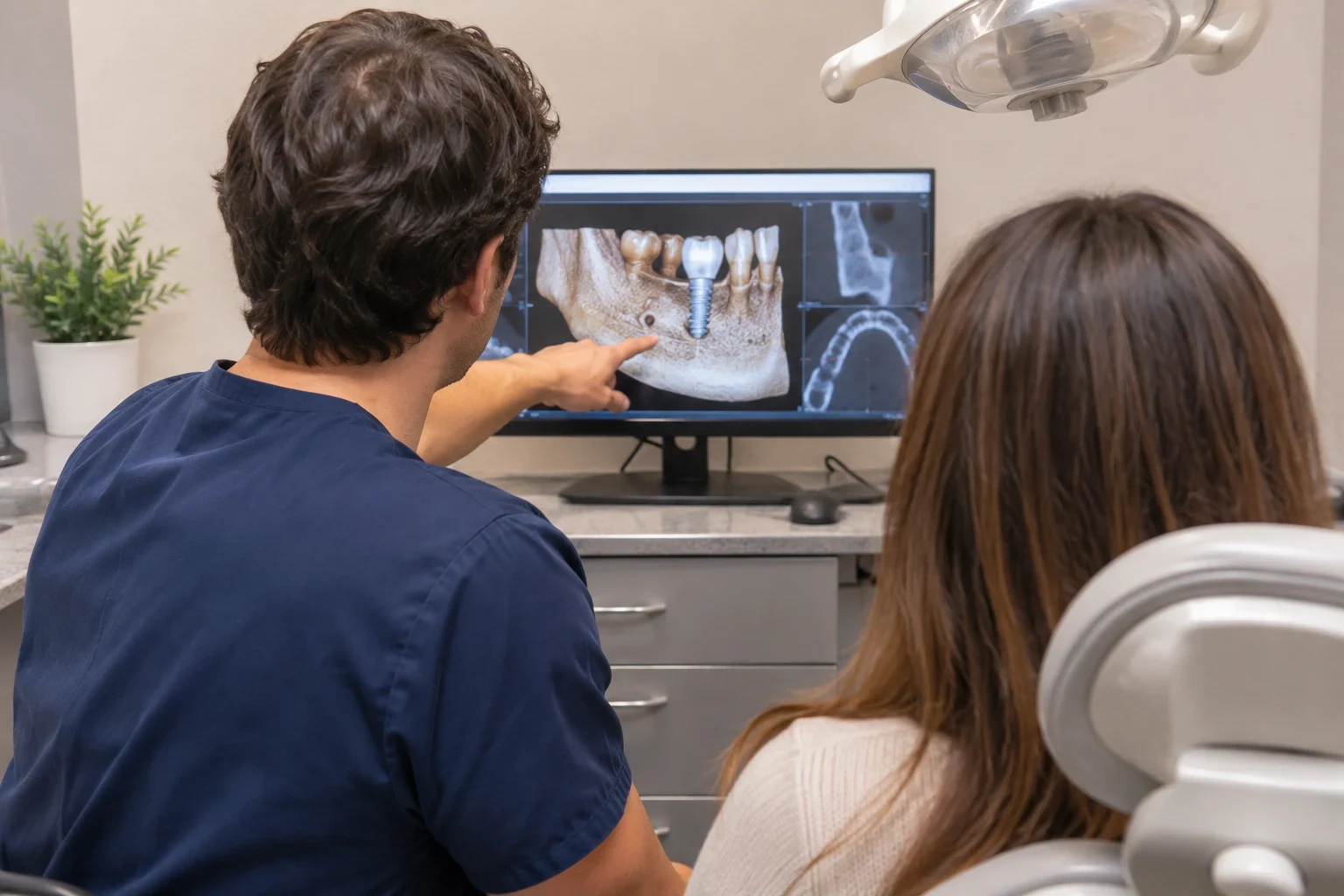
A dental implant replaces the whole tooth, root included, so it chews and holds bone like the original. Before we plan one, we check whether your own tooth can be repaired. If it can, we tell you. If it can't, we show you why on the scan.
What an implant is and when it is the right call
An implant has three parts. A titanium post sits in the jawbone where the root used to be. An abutment connects to the top of that post. A custom crown attaches to the abutment and is shaded to match the teeth beside it. Over several months the bone grows tight against the titanium surface, a process called osseointegration, and that bond is what lets an implant handle full chewing force.
We don't start with an implant. A cracked or decayed tooth can often be kept with a root canal and a crown, and a natural root is still the best thing in your jaw. An implant makes sense when the tooth is split below the gumline, the decay reaches too far into the root, or the tooth is already gone. In those cases a bridge would mean grinding down two healthy neighbors, and a partial denture rests on the gums instead of the bone.
Patients come to us from Highland Village, Flower Mound, Lewisville and the surrounding area for single implants and multiple-tooth replacement, and every plan begins with the same question: can this tooth be saved?
What your implant treatment includes
3D CBCT imaging
A cone beam scan shows bone height, width and density, plus the position of nerves and the sinus floor. Flat X-rays can't measure those, and they decide where and how deep the post can go.
A repair-or-replace answer
We look at the tooth itself first. If a root canal or crown can keep it working, we lay that out next to the implant option so you can compare them.
Post placement
The titanium post is placed under local anesthetic, with the gum closed over it or a small healing cap left showing, depending on the site.
Bone grafting when needed
After a tooth has been missing for a while, the bone around it shrinks. If the scan shows too little volume to hold a post, a graft rebuilds it first.
Abutment and custom crown
Once the post has fused, we take impressions and fit a crown shaped to your bite and shaded to blend with your smile.
Follow-up checks
We check healing during the integration months and look at the gum and bone around the implant at your regular visits.
Signs an implant may be the better option
A gap that is starting to shift your bite
Teeth next to a space tend to tip into it, and the opposing tooth can drift down. That changes how your bite meets and can strain the jaw joint.
A tooth cracked below the gumline
A vertical root fracture usually can't be sealed. A crack that stays above the gum often can be crowned, so we check where it ends before recommending anything.
A loose bridge or partial
If a bridge keeps failing or a partial rocks when you chew, an implant can carry the load without depending on the teeth around it.
Bone loss where a tooth used to be
Without a root to stimulate it, the jawbone thins over time. Replacing the root sooner keeps more bone and often avoids a larger graft.
Repeated work on the same tooth
A tooth that has had a filling, a root canal and a retreatment may have too little structure left to hold another crown.
How the implant process runs
- 1
Evaluation and scan
We start by looking at the tooth and gum, then capture digital X-rays, plus a CBCT scan when the bone needs measuring. We review the images together on screen, and you go home with a written treatment plan.
- 2
Extraction or grafting, if needed
A damaged tooth that is still in place is removed first. Sometimes we place graft material in the empty socket at that same visit so the bone keeps its shape.
- 3
Placing the post
Once the area is numb, the titanium post goes in at the angle and depth mapped out on your scan. Most patients call the following few days sore, not painful.
- 4
Healing and integration
Over about four months the bone fuses to the post. You chew softer foods on that side, and a temporary tooth can cover the gap if it shows when you smile.
- 5
Crown fitting
We connect the abutment and test the crown against your bite in several jaw positions. Then we fine-tune it so it carries no more force than the teeth beside it.
What moves the cost of an implant
Implant fees vary because the jawbone, the damaged tooth and the final restoration differ from one mouth to the next, so your written treatment plan lists each part of the work as its own line item. We are in-network with more than 15 major PPO dental insurance plans, and uninsured patients can join our in-house Membership Plan. If you would rather pay over time, you can spread the balance across as many as 24 months without paying any interest. Seeing whether you are preapproved leaves your credit score untouched.
- Bone volume
- When the scan shows enough dense bone, we can move directly to placing the post. A thin or resorbed ridge needs grafting first, which adds a procedure and extra healing months.
- Whether the tooth is still present
- Taking out a broken tooth is its own procedure, separate from the implant. Roots that are curved, fused to bone or fractured take more time to remove cleanly.
- Number of teeth
- Replacing a single tooth with a single post and crown keeps the plan short. When several neighboring teeth are missing, two posts can sometimes carry a bridge across the gap instead of placing one post per tooth.
- Crown material and location
- A crown in the front of your smile needs more careful shade and translucency matching than one on a back molar. We choose the material for the chewing load at that position.
- Your insurance coverage
- PPO plans differ on how they handle implants, grafts and crowns. We look up your benefits and show you the portion your plan is expected to pay.
Dental implant questions
Something not covered here? (972) 483-4293
Does getting an implant hurt?
We numb the site with local anesthetic before we start, so what you notice during placement is pressure, not sharp pain. For a few days afterward expect some tenderness and mild swelling, which over-the-counter pain relievers usually handle. Plenty of patients tell us the post was easier than the extraction before it.
How long does the whole process take?
Plan on roughly four months between placing the post and fitting the final crown, because that is how long bone takes to bond to titanium. An extraction or bone graft beforehand adds its own healing period. Before any treatment begins, your plan spells out the expected timeline.
Why would you suggest a root canal instead of an implant?
A natural root that is healthy enough to keep beats any replacement we can place. A root canal with a crown can hold a tooth in service for many years, with fewer visits and lower cost than an implant. We only recommend an implant when the scan shows the tooth can't be reliably saved.
Can I get an implant if I've been told I don't have enough bone?
In many cases, yes. Grafting can restore the width or height of the ridge so the post has solid bone to fuse with. Your CBCT scan measures the bone that is there and tells us whether a graft has to come first.
How do I care for an implant?
Clean around it the same way you clean a natural tooth, with extra attention at the gumline where plaque builds up. The crown itself can't get cavities, but the gum and bone supporting the post can become inflamed if plaque is left in place. Regular cleanings let us spot that early.
Find out whether you need an implant at all
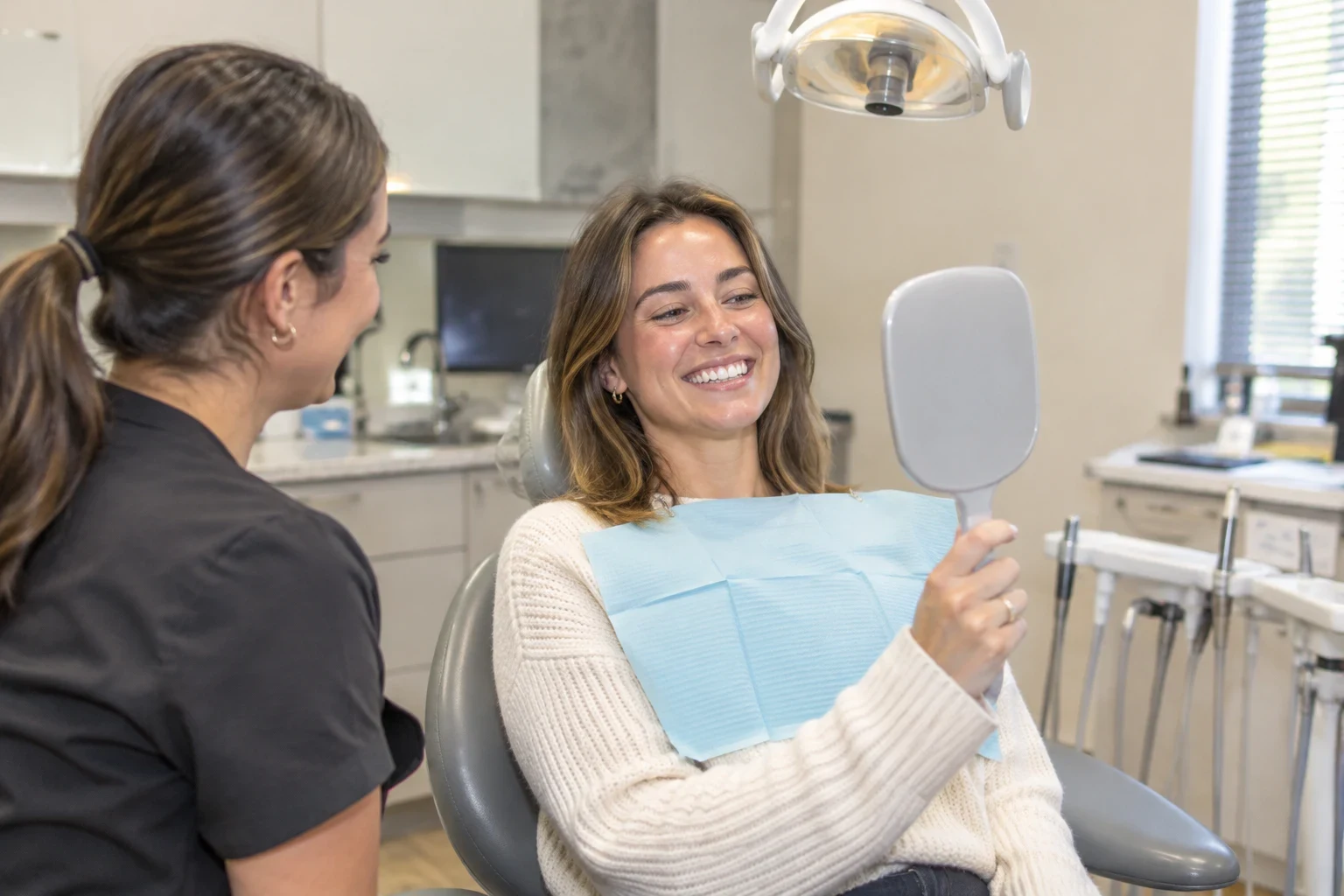
At the evaluation we look closely at the tooth, take digital X-rays, add a CBCT scan when the case calls for it, and sit down with you to go over the treatment plan. If your own tooth can be kept, saving it is what we will recommend.