ServicesDentures
Dentures in Highland Village
We make full and partial dentures, reline and repair the ones you already wear, and anchor them to dental implants when a loose fit will not settle down. If your current denture can be fixed, we tell you that first, then explain plainly when a new one makes more sense.
When a denture is the right call
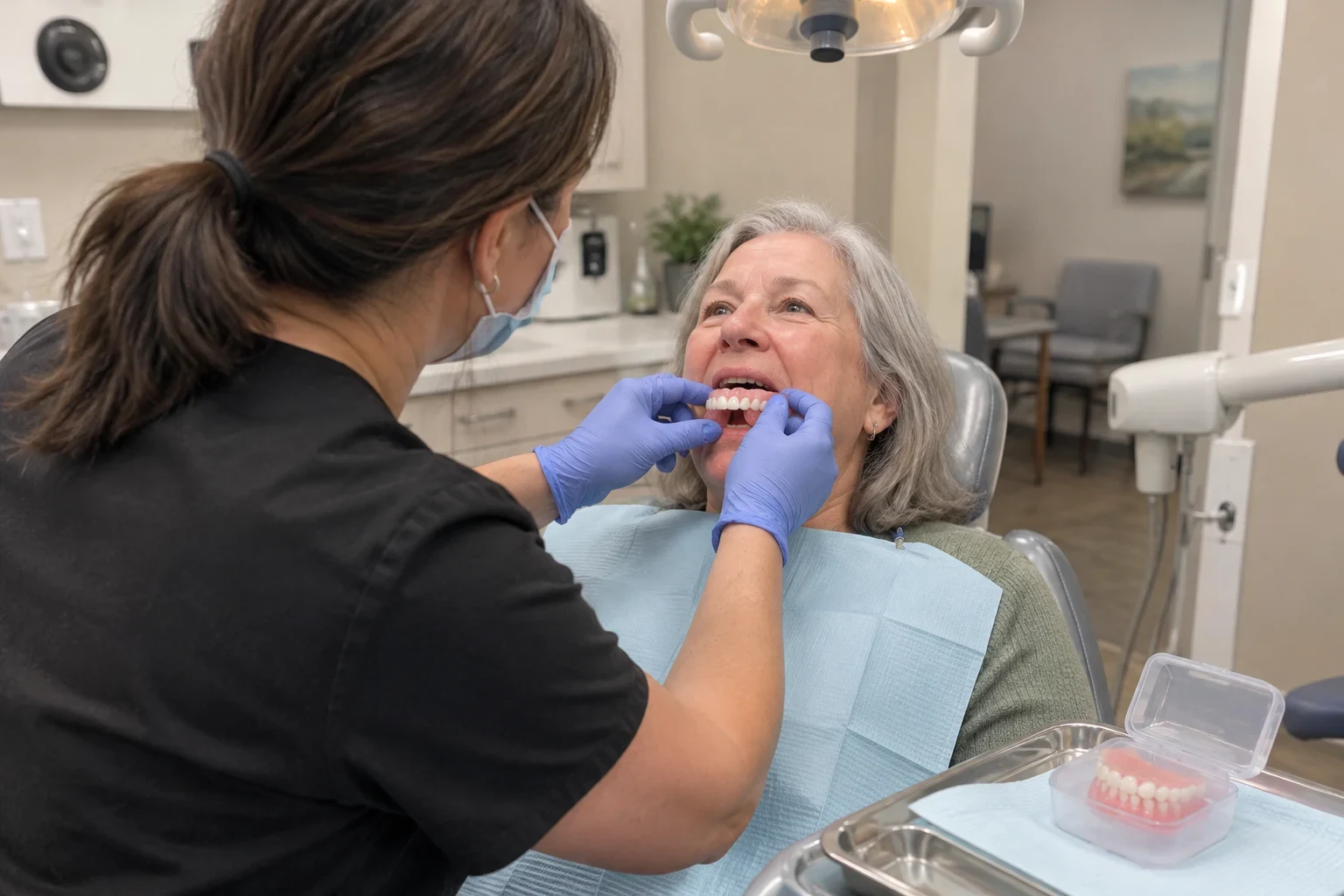
A denture replaces missing teeth with acrylic or porcelain teeth set in a pink acrylic base. A full denture covers an entire arch and holds by suction against the gums and palate. A partial clips onto the natural teeth you still have, usually with a cast cobalt-chrome or flexible nylon framework.
Not every problem needs a new one. Gums and the bone beneath them shrink after teeth are lost, so a denture that fit well five years ago can rock and rub today. Often a reline, which adds fresh acrylic to the fitting surface, restores the seal. A cracked base or a lost tooth can usually be fixed. We recommend replacement when the teeth are worn flat, the base has been patched again and again, or your bite has collapsed.
For patients whose lower denture never stays put, two to four dental implants can hold it in place with snap-on attachments. Our Dental Implants page covers that option, and we will talk it through at your visit.
What our denture care covers
- Full dentures
- Upper and lower complete dentures made from custom impressions and bite records. We settle tooth shade, size and lip support with you before anything is processed.
- Partial dentures
- Metal-framework or flexible partials that clip to your remaining teeth. Healthy teeth help preserve the bone around them, so we design around what you still have.
- Relines and rebases
- A reline resurfaces the inside of the denture to match how your gums have changed. A rebase replaces the whole pink base but keeps the existing teeth, which saves money when those teeth are still in good shape.
- Denture repairs
- Fractured bases, snapped clasps and lost teeth. We check the fit at the same visit, because a poorly fitting denture flexes under chewing and tends to crack in the same place again.
- Implant-retained dentures
- Locator-style attachments on dental implants let a denture snap in and stay put while you eat. Worth discussing when suction alone is not enough.
- Immediate dentures
- A denture placed the same day teeth are removed during extractions, so you are not without teeth while the gums heal. Expect a reline or two as the tissue settles.
Signs your denture needs attention
It rocks or drops when you talk
Bone loss under the gums has changed the shape the denture sits on. A reline usually fixes this if the base is sound.
Sore spots that keep coming back
Pressure points from a poor fit cause ulcers and, over time, inflamed tissue. Adjustments are quick, so there is no reason to keep wearing through the pain.
You go through adhesive fast
Adhesive should help a good fit, not be the thing holding the denture in. Heavy use usually means the fit has drifted.
Teeth look short or worn flat
Acrylic teeth wear down, which lowers your bite and can make the lower face look sunken near the corners of the mouth. Worn teeth are a common reason we recommend a new denture over a reline.
Cracks, chips or a loose clasp
Small fractures grow under chewing force. A hairline crack is easier to fix than a base that has split in two.
What moves the cost of dentures
Price depends on what you need and how it is made, so you get a written treatment plan before any work begins. Insurance can help: we are in-network with 15+ major PPO dental insurance plans. You can also spread the cost over as long as 24 months at 0% interest, and seeing whether you preapprove will not touch your credit score. Uninsured patients can ask about our In-house Membership Plan.
Repair, reline or new denture
Fixing a sound denture costs far less than replacing it, which is why we check that first.
Full versus partial
A partial with a cast metal framework involves more lab steps than a flexible partial. Full dentures vary with the tooth and base materials chosen.
Extractions and healing
If teeth must come out first, the extractions and an immediate denture add to the plan, along with the relines that follow as the gums shrink.
Implant support
Adding dental implants raises the cost, but it often changes how well a lower denture stays in while you chew.
How getting a denture works
- 1
Evaluation and X-rays
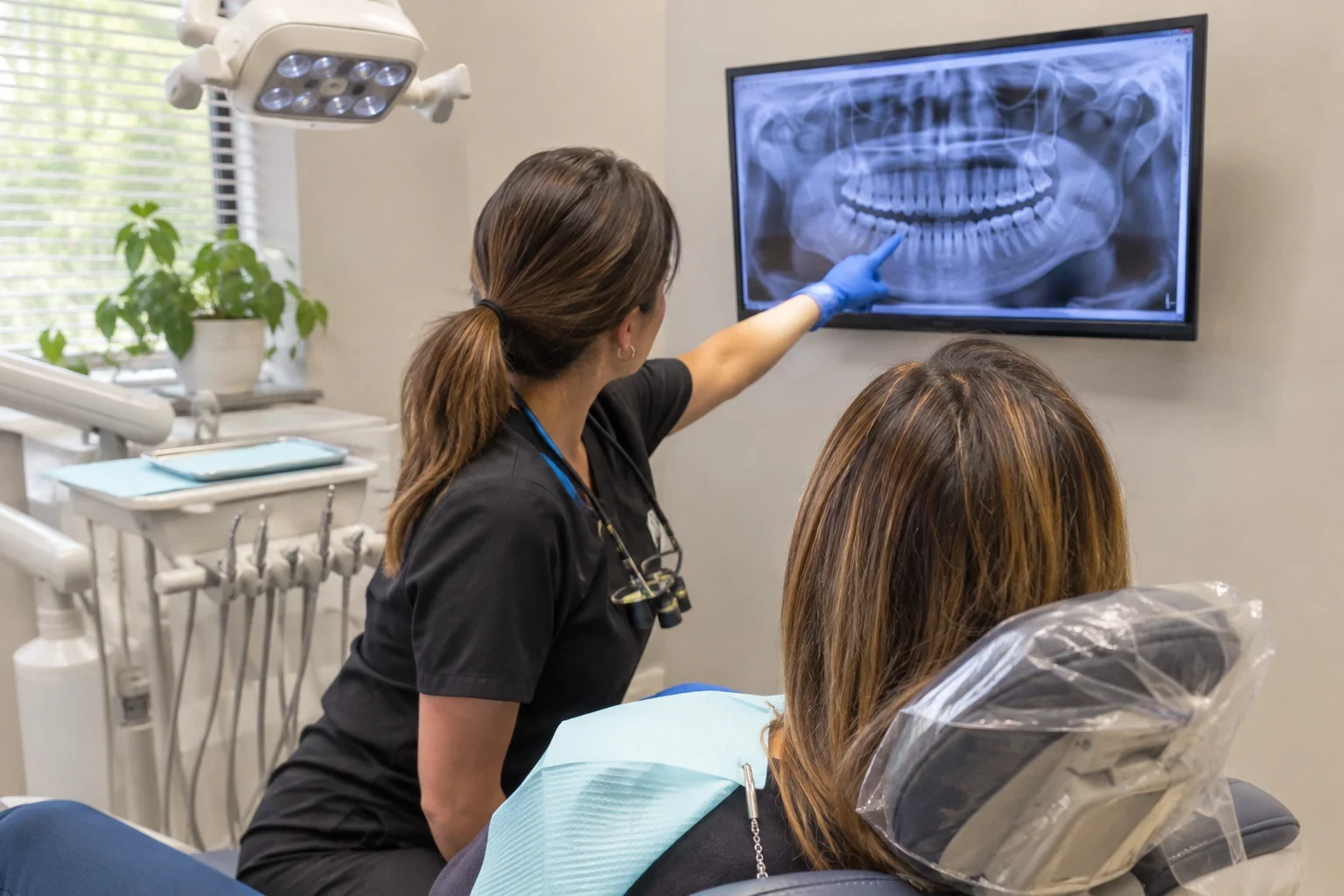
We examine your gums, any remaining teeth and the bone, using digital X-rays and a CBCT scan if needed. If you already wear a denture, we check whether it can be relined or repaired before discussing a new one.
- 2
Impressions and bite records
Custom impressions capture the ridges and the muscle attachments along the edges of the denture. Bite records set how your jaws meet and how much space the teeth need.
- 3
Wax try-in
You see and test the teeth set in wax before the final denture is made. Shade, length and speech are easy to change at this stage and hard to change later.
- 4
Delivery and adjustments
We fit the finished denture, find any pressure points and smooth them. Plan on a few follow-up visits in the first weeks while your gums adapt and the denture becomes comfortable.
Denture questions patients ask
Can you fix my old denture instead of making a new one?
Often, yes. A crack, a missing tooth or a loose fit can usually be repaired or relined. If the teeth are worn flat or the base has been patched many times, we will show you why a new denture will serve you better.
How long until I can eat normally?
Most patients need a few weeks to get comfortable chewing and speaking. Start with soft foods cut small, and chew on both sides at once to keep the denture stable. Follow-up adjustments make a real difference during that period.
Should I sleep in my denture?
We generally advise taking it out at night. Your gums need time without pressure, and removing it lets you clean it and lowers the risk of fungal irritation under the base. Store it in water or a soaking solution so the acrylic does not dry out and warp.
Are implant-retained dentures better than regular dentures?
They hold far better, especially on the lower jaw, where suction is weak. They also involve surgery and healing time. We review your bone on a CBCT scan and tell you honestly whether implants add enough to be worth it for you.
What does the first visit include?
The first visit is our Focused Evaluation, and it costs $25. We do a thorough comprehensive exam and take digital X-rays, adding a CBCT scan when the bone needs a closer look. Then we sit down for a consultation and build your treatment plan together. You leave knowing whether a fix, a reline or a new denture fits your situation.
Find out if your denture can be saved
Bring your current denture, or just your questions, to a focused evaluation. We check the fit, explain what we see and lay out a clear plan. Patients from Flower Mound, Lewisville and nearby towns are welcome.