ServicesExtractions
Tooth Extractions in Highland Village
A painful or broken tooth does not always have to come out. We examine it, take digital X-rays and tell you plainly whether it can be saved. When removal is the right answer, we take the tooth out gently and plan what replaces it.
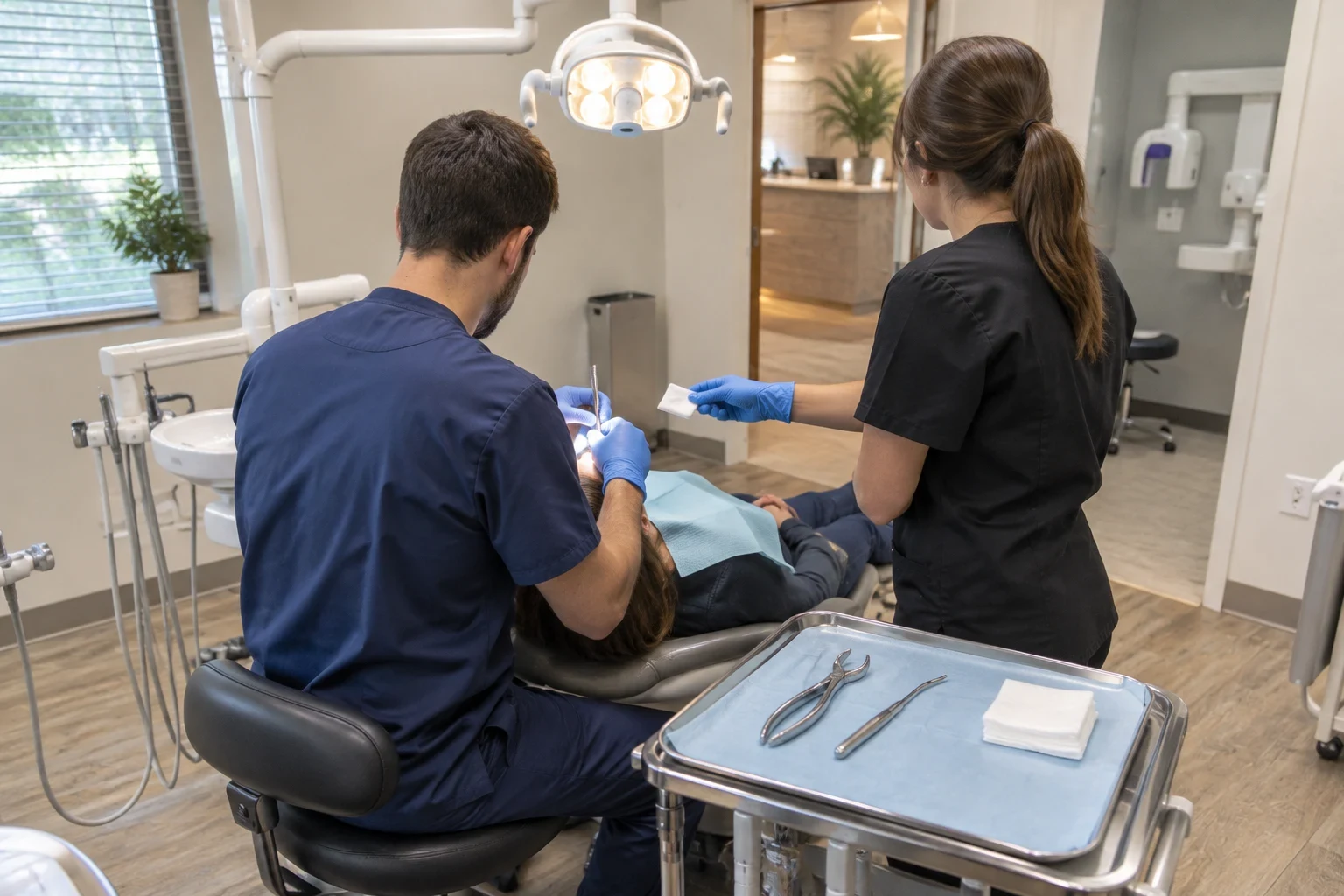
When Removing a Tooth Is the Right Call
Our first question with any damaged tooth is whether it can be kept. A tooth with a large cavity or a crack above the gumline can often be rebuilt with a filling, a crown or a root canal, and your own root holds bone in place better than anything we can put there later. We say so when that is the sensible path.
Some teeth cannot be restored. A crack that runs down the root, decay that reaches below the bone, or gum disease that has destroyed the bone around a root leaves too little to anchor a crown. Repairing those teeth usually means paying for work that fails within a few years. In those cases we explain why extraction makes more sense and show you on the X-ray what we are seeing.
Patients come to us from Highland Village, Lewisville, Flower Mound and nearby towns for both simple and surgical extractions, and for a clear plan for the gap afterward.
What Your Extraction Includes
Exam and digital X-rays
We check the root shape, the surrounding bone and nearby nerves before we touch the tooth. If roots are curved or close to the sinus or the lower jaw nerve, a CBCT scan gives us a 3D view.
Thorough local anesthetic
We numb the tooth, the gum and the ligament that holds it, and we test the area before starting. You may feel pressure, but you should not feel sharp pain.
Simple or surgical removal
A fully visible tooth is loosened with an elevator and lifted out with forceps. A broken or impacted tooth may need a small gum flap or to be sectioned into pieces so it comes out with less force on the bone.
Socket care and stitches
We clean the socket, place dissolvable stitches when needed and use gauze to help a stable blood clot form. That clot protects the bone while it heals.
A replacement plan
Before you leave, we go over options for the space: dental implants, a bridge or dentures. If an implant is likely, we may talk about preserving bone in the socket at the time of removal.
When a Tooth May Be Past Saving
A fracture running into the root
Once a split travels below the gum and down the root, bacteria get into a space no crown can close off. Sharp pain on biting that shows up and then fades is a typical hint.
Movement when you press on it
A tooth that shifts usually has lost supporting bone to gum disease. Some can be firmed up, so we measure the remaining bone before calling it.
Decay below the bone line
When a cavity eats the tooth down past the level of the bone, nothing sturdy is left to hold a filling or crown.
An abscess that returns
Repeated swelling around a tooth that already had a root canal can point to a cracked root. We confirm the cause before we talk about removal.
Crowding or constant rebuilding
A tooth that blocks its neighbors, or one patched so many times it keeps breaking, can cost more to maintain than to replace.
How Extraction Day Goes
- 1
Review and consent
We go over your X-rays, your medications and the plan for the tooth. Tell us about blood thinners or recent health changes so we can plan safely.
- 2
Numbing
We place the anesthetic and wait until the area is fully numb. Most simple extractions take only a few minutes once we begin.
- 3
Removal
We widen the socket slightly and work the tooth free with steady pressure. If it resists, we section it rather than force it, which protects the bone and nearby teeth.
- 4
Aftercare at the chair
We place gauze, give written instructions and explain what to expect over the next week. Avoid straws, smoking and hard chewing on that side for several days, since suction and pressure can dislodge the clot.
What Moves the Price of an Extraction
The biggest drivers are how hard the tooth is to remove and what you plan to put in the space afterward. We give you the cost before any treatment begins, so the bill lines up with the plan we talked through. Our office participates in more than 15 major PPO dental insurance networks, and patients without coverage can sign up for our in-house Membership Plan.
- Simple or surgical
- A tooth that comes out in one piece with forceps needs less chair time than one snapped off at the gumline or still held in bone.
- Roots and their neighbors
- Long, curved or multiple roots take more work, and roots sitting near the sinus or the lower jaw nerve may need a CBCT scan first.
- Saving bone for later
- If an implant is in your plans, we may place grafting material in the socket to hold bone volume, which adds to that visit.
- How you pay
- With a PPO plan, your coverage sets your share of the cost. You can also spread payments over up to 24 months at 0% interest, and checking for preapproval leaves your credit score untouched.
Extraction Questions We Hear Often
Something not covered here? (972) 483-4293
Will having a tooth pulled hurt?
The anesthetic blocks sharp pain, so most patients describe pressure rather than pain during the extraction. Afterward, soreness is normal for a few days and usually responds to over-the-counter pain relievers. We tell you which to use based on your health history.
Can you save my tooth instead?
Often, yes. If enough healthy root and bone remain, a root canal and crown can keep the tooth working for many years. We only recommend extraction when the X-rays show the tooth cannot hold a lasting restoration.
What is dry socket and how do I avoid it?
Dry socket happens when the blood clot breaks down or washes out, exposing bone and causing a deep ache a few days after removal. Not smoking, not using straws and rinsing gently as instructed all lower the risk. If it happens, we clean and dress the socket to ease the pain.
Do I have to replace the tooth?
Not always, but a gap lets neighboring teeth tip and the opposite tooth drift, and the jawbone shrinks without a root to stimulate it. Back molars and front teeth usually matter most. We explain whether dental implants, a bridge or dentures make sense for you.
How long until I can get an implant?
It depends on the bone. Some sockets are ready for an implant soon after healing, while others need a graft and a few months first. Your CBCT scan tells us which applies.

Find Out Whether Your Tooth Can Be Saved
Bring us the tooth that is bothering you. We will examine it, take X-rays and give you a straight answer on keeping it or removing it.